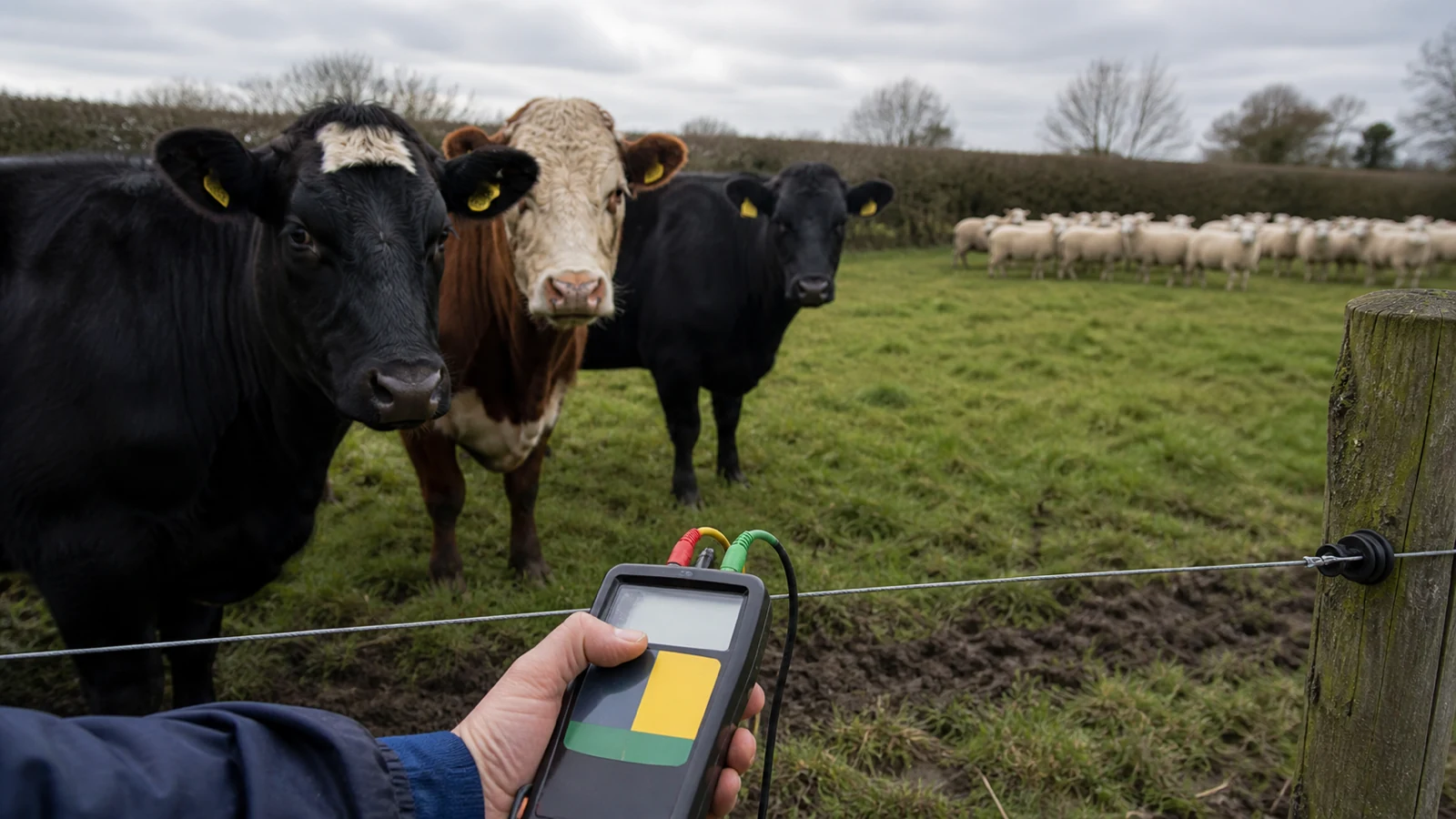
Electric fence voltage for cattle and sheep UK: targets need context
Use voltage guidance as a field target, then verify it at the farthest post with a tester. For cattle and sheep, the right answer depends on training, wool or coat, wet vegetation and earth quality. AHDB publishes practical voltage guidance for calves, trained cattle and sheep.
Field target table
| Stock situation | Practical target | Why it changes |
|---|---|---|
| Calves or untrained cattle | Higher training voltage | They have not learned to respect the fence |
| Trained cattle | Moderate maintained voltage | Behaviour helps once the line is reliable |
| Sheep with wool | Higher margin | Wool reduces contact with the pulse |
| Shorn or habituated sheep | Lower than training stage, but still tested | Less insulation and learned behaviour help |
Why wool and winter coats matter
A short line can still fail if the pulse does not reach skin contact. Agrisellex notes that sheep wool is a poor conductor in electric fencing decisions. Thick winter coats on cattle create a similar practical concern: the measured voltage and pulse energy need enough margin for real animals in real weather.
When joules matter more than the headline volts
Headline open-circuit voltage is not the same as useful voltage on a wet, loaded fence. Joules matter when the fence is long, multi-wire, affected by wet grass, or holding mixed stock. They are not a licence to ignore earthing or let vegetation grow through the line.
Negative fit
Do not rely on a minimum voltage number alone for a long wet perimeter, sheep netting buried in grass, or cattle that are still learning the fence. If far-end voltage is low after rain, troubleshoot wet grass voltage drop and earthing before assuming the species guidance is wrong.
The habit that prevents escapes
Test at the farthest point after moving stock, after heavy rain, after cutting silage or hay nearby, and whenever animals start leaning on the line. The number at the energiser is useful; the number at the animal end is the one that protects the fence.