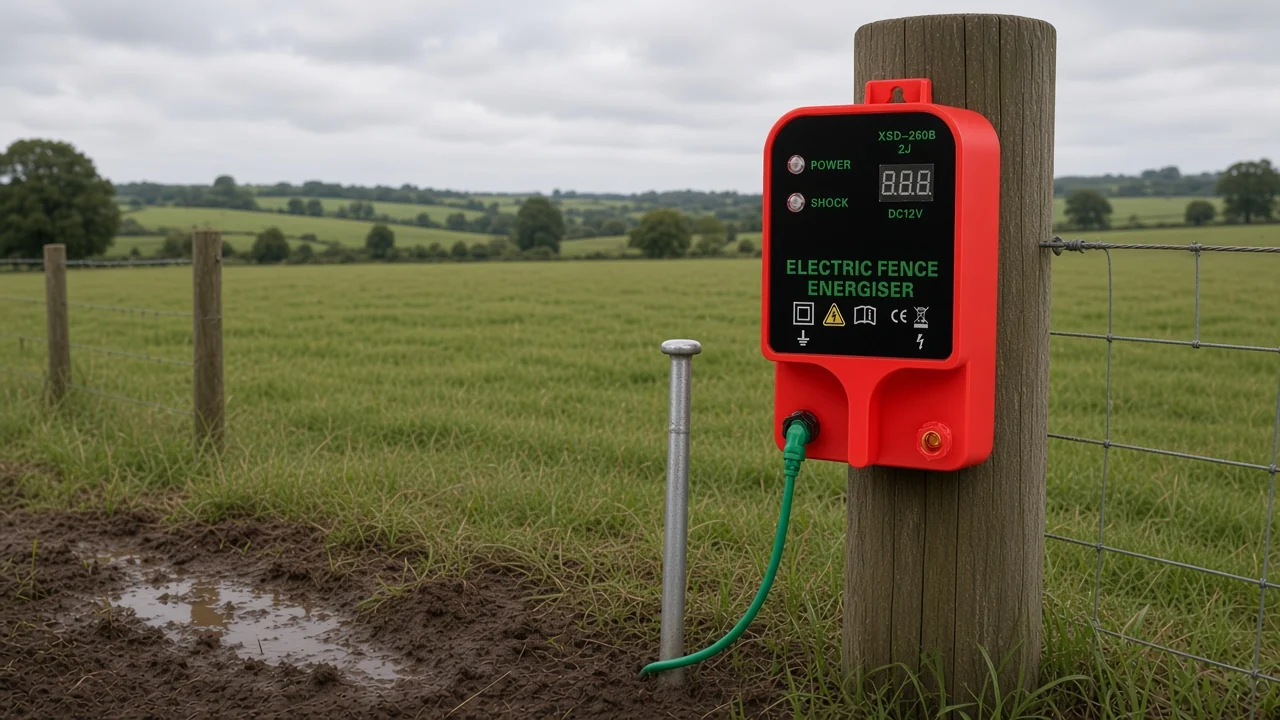
Electric fence earth rod installation UK: fix earthing before upsizing
If an electric fence feels dead or weak, check the earth system before blaming the energiser. A fence only works when the pulse can travel along the conductor, through the animal and soil, and back to the energiser earth. AHDB describes the earth system as one of the core parts of a working electric fence, so a poor rod can make a good unit look underpowered.
The quick diagnosis
- Look for a steady energiser pulse light.
- Disconnect the fence line and test the unit on a short, clean section.
- Reconnect the fence and test voltage at the far end.
- Create a controlled load on the fence, then test the earth return.
- If earth voltage is high, add or improve rods before buying more joules.
The practical point is simple: do not judge the energiser from the click alone. A pulse light says the box is firing; it does not prove the soil return is good or that the far end of the paddock is live enough.
Where to put the earth rod
Choose consistently damp ground, not the driest corner beside concrete or rubble. UK suppliers commonly advise galvanised earth rods, secure clamps and separation from other electrical earth systems. Electric Fence Online gives grounding guidance including rod spacing and keeping fence earths away from other earth systems, while Dalton Supplies notes moist soil and safe installation practice for UK electric fencing.
Use the same metal family for rod and clamp where possible, tighten the connection, and use insulated cable between the energiser earth terminal and the rod. Loose clips and mixed, corroding metals waste power in exactly the place you need a clean return path.
When one rod is not enough
A small, short, clean temporary fence may work with a modest earth. Longer runs, higher-output energisers, dry sandy soil and wet vegetation load usually need more earth capacity. Add rods in a line, spaced well apart, and connect them with insulated lead-out cable. The exact count depends on the energiser rating, soil and manufacturer instructions.
Stop condition: do not buy yet
Do not buy a replacement energiser yet if you have never tested the earth under a loaded-fence condition. First prove that the unit works on a short clean line, then prove the earth return can cope. If the fence improves after deeper or additional rods, the fault was not the energiser size.
Next checks
If earthing is sound but voltage still falls after rain, read the wet-grass troubleshooting guide at voltage drop in wet grass. If you are buying your first complete setup, use the starter shopping list so the earth kit and tester are budgeted from the beginning.